
How to Calculate and Increase ROAS for D2C Brands
In this article
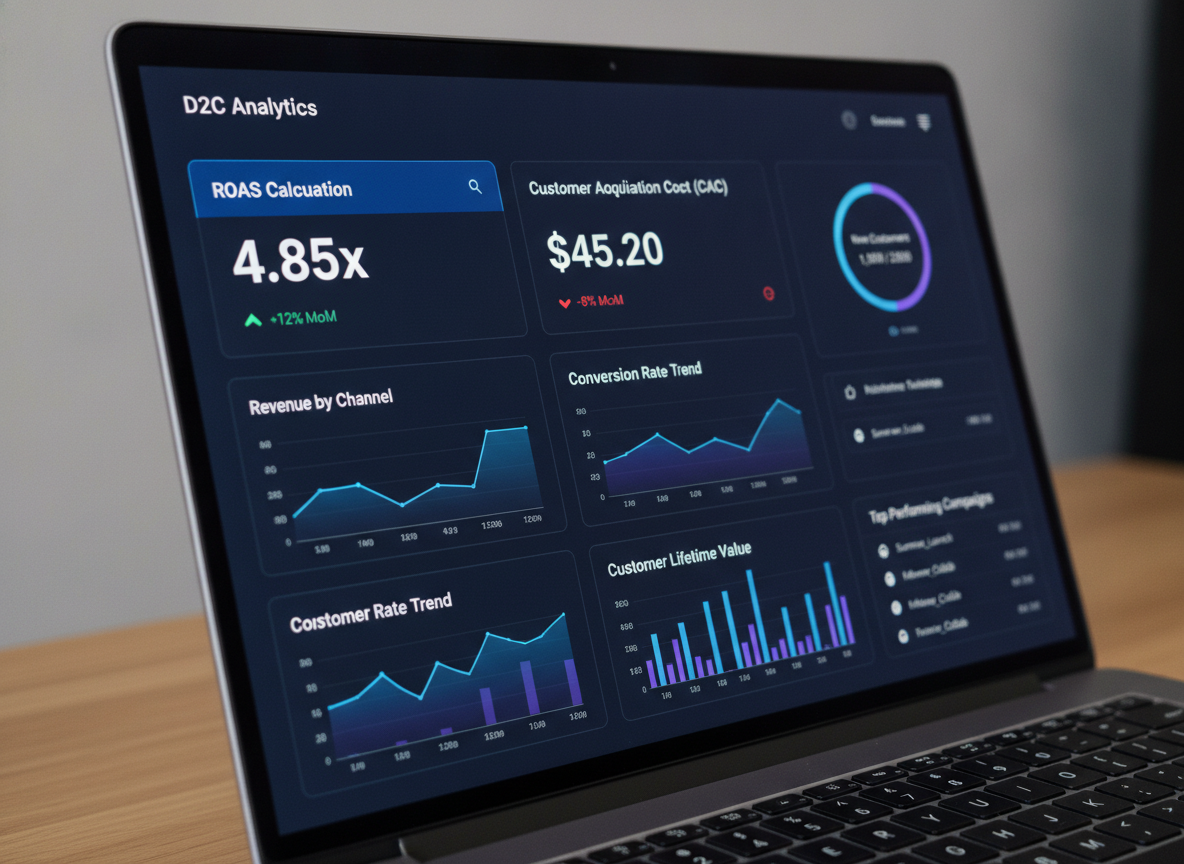
Many Direct-to-Consumer (D2C) brands struggle to scale because they treat revenue growth and profitability as the same thing. This guide covers how to accurately calculate your Return on Ad Spend (ROAS) and actionable ways to increase it by optimizing ad costs.
- Master the fundamental formula for calculating ROAS.
- Understand why optimizing ad cost is critical for D2C survival.
- Discover how top Indian D2C brands scale ad spend effectively.
- Automate your creative optimization with EngageReel.
For evidence-backed context, see our D2C fashion ROAS case study and creative fatigue playbook before restructuring campaigns.
Are you spending blindly on Meta and Google without knowing your actual return? For Direct-to-Consumer (D2C) brands, measuring the exact performance of every advertising dollar is non-negotiable. Merely looking at total sales hides the reality of customer acquisition costs. To survive, you must calculate your ROAS accurately and deploy specific tactics to increase it.
The formula to calculate ROAS accurately
Return on Ad Spend (ROAS) measures the gross revenue generated for every dollar spent on a specific advertising campaign. The formula is universally straightforward:
ROAS = Total Revenue Earned / Total Amount Spent on Advertising
If you spend $20,000 on a Meta Ads campaign and earn $60,000 in revenue directly attributed to those ads, your ROAS is 3 (or 3x). This means you earned $3 for every $1 spent. While calculating this is simple, the challenge lies in ensuring your attribution tracking is accurate so that the "Revenue Earned" figure is actually correct.
| Ad Spend | Revenue Earned | ROAS Ratio | Status |
|---|---|---|---|
| $10,000 | $15,000 | 1.5x | |
| $20,000 | $60,000 | 3.0x | |
| $50,000 | $250,000 | 5.0x |
Why optimizing your ad cost is mandatory in D2C
Conventional wisdom might suggest cutting ad spend to save money, but in the highly competitive D2C landscape, discoverability is driven by ad volume. In recent industry reports, top D2C brands are actually increasing their ad budgets significantly. For example, a leading D2C beauty brand increased their promotional spend by 184% in a single year to capture market share.
However, spending more does not mean spending blindly. Increasing your ad budget while simultaneously optimizing your ad cost—by improving targeting, increasing ad relevance, and boosting conversion rates—is the only way to scale without destroying your profit margins. You must spend smarter, not just larger.
How creative relevance dictates your acquisition cost
The Meta and Google algorithms reward relevance. If your ad creative resonates with the target audience, your click-through rate (CTR) increases, and the platform charges you less per impression (lower CPM). Conversely, irrelevant or fatigued ads are penalized with high costs.
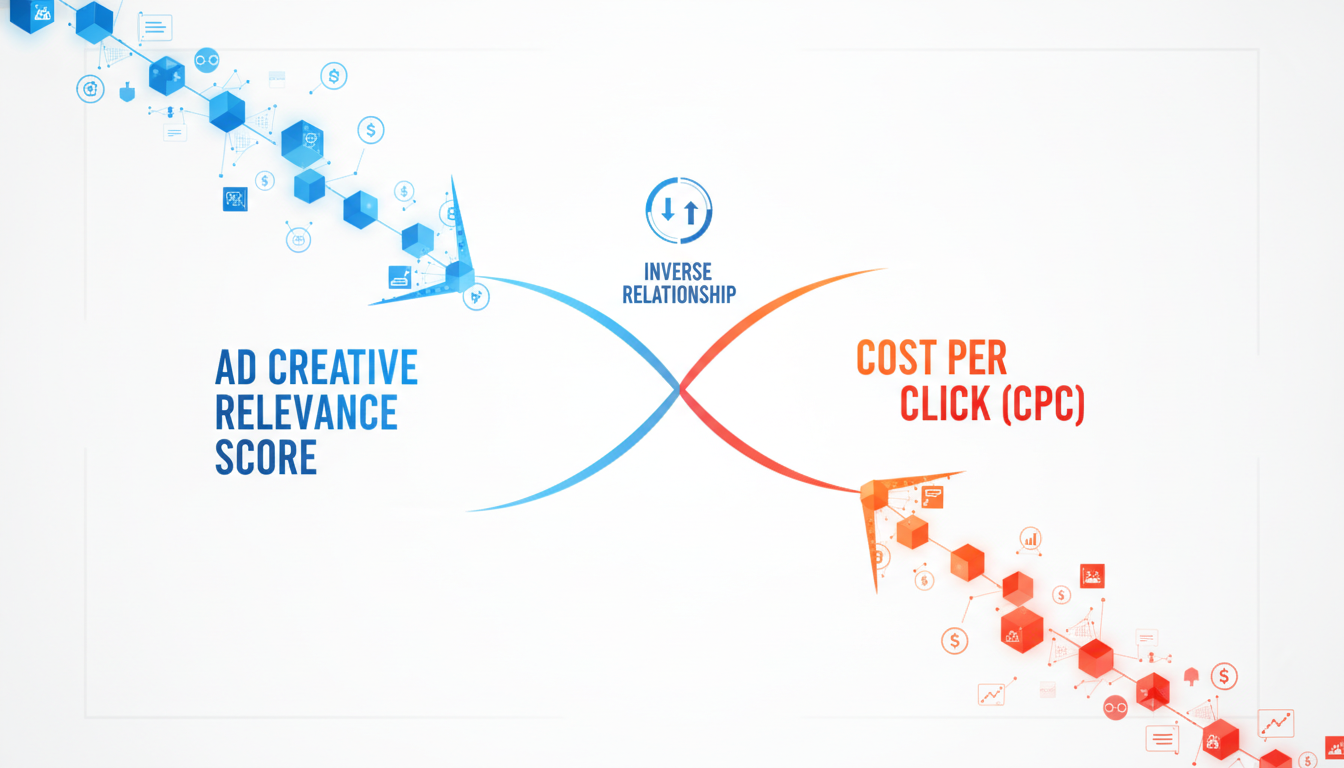
To increase your ROAS, you must constantly test new ad creatives. For fashion and beauty D2C brands, this means rotating user-generated content (UGC), unboxing videos, and lifestyle imagery to keep the audience engaged and the algorithmic relevance scores high.
When post-click experience ruins your ad returns
Even the best ad creative cannot overcome a poor landing page. If you are paying for high-intent traffic but your website loads slowly or lacks clear product information, the traffic will bounce. This plummets your conversion rate and tanks your ROAS.

Ensure that the promise made in the ad matches the reality of the landing page. If you advertise a specific product bundle, the user must land directly on that bundle's page, not a generic homepage. Streamlining the checkout process also directly increases the revenue generated per click.
EngageReel automates creative testing and spend allocation
Calculating ROAS manually via spreadsheets while trying to manage daily creative testing is inefficient and prone to error. EngageReel—an AI ad performance and creative platform for fashion eCommerce—watches every creative you run, learns what converts, and optimizes Meta, Google, and TikTok spend 24/7.
By automating the testing process, EngageReel ensures your budget is always allocated to the highest-performing assets. It removes the guesswork, actively lowering your acquisition costs and increasing your true ROAS while you focus on product and operations.
Frequently asked questions
How do you calculate ROAS?
You calculate ROAS by dividing the total revenue earned from a specific ad campaign by the total amount spent on that campaign. For example, $10,000 in revenue divided by $2,000 in ad spend equals a 5x ROAS.
Is a 3x ROAS good for a D2C brand?
A 3x ROAS can be good, but it depends entirely on your Cost of Goods Sold (COGS) and operational expenses. If your profit margins are thin, a 3x ROAS might only mean you are breaking even.
Why should D2C brands spend more on ads instead of cutting budget?
In the D2C market, discoverability requires ad spend. As noted by leading growth marketers, increasing optimized ad spend captures market share. The goal is to spend efficiently to acquire customers, not to cut budgets and lose visibility.
How does ad relevance impact ROAS?
High ad relevance leads to higher engagement (CTR), which signals to the platform algorithm that users like your ad. The platform rewards this with lower costs per impression (CPM) and click (CPC), directly increasing your ROAS.
Can AI help D2C brands increase their ROAS?
Yes. Platforms like EngageReel use AI to analyze which creative assets are driving the most profitable conversions, automatically reallocating your ad spend to maximize returns without requiring manual adjustments.
References
- McKinsey — How to Increase ROAS for D2C Brands (2026)
- Deloitte Digital — ROAS: What it is, How to Calculate it (2025)
- Shopify Enterprise — How to Improve ROAS in Online Fashion Advertising (2026)
- Meta Business Insights — 5 Ways to Boost ROAS (2021)
- Baymard Institute — How to Increase ROAS in Meta Ads (2026)